


Fleuret d’escrime
The foil started to be used in France in the first half of the 17th century as a training thrusting weapon for the safe practice of fencing first with the duelling rapier or military sword, later with the small sword and eventually with the duelling sword. The weapon was given its name from the shape of the protective arcs it originally had, which were reminiscent of a flower (fleur). It is a very light practice weapon for thrusting. It has a blunt blade with a square cross-section and a small ball on the end, the purpose of which is to minimise the risk of harming one’s opponent in a practice duel. The foil was never used as a duelling weapon. In the 18th and 19th centuries, a piece of strong wire twisted into a figure-of-eight shape formed the simple guard. In the second half of the 19th century, fencing with this typical practice weapon became a sporting discipline in its own right. We teach French foil fencing following the methodology of the École Normale de Gymnastique et d’Escrime military academy in Joinville-le-Pont, which was founded in 1872.
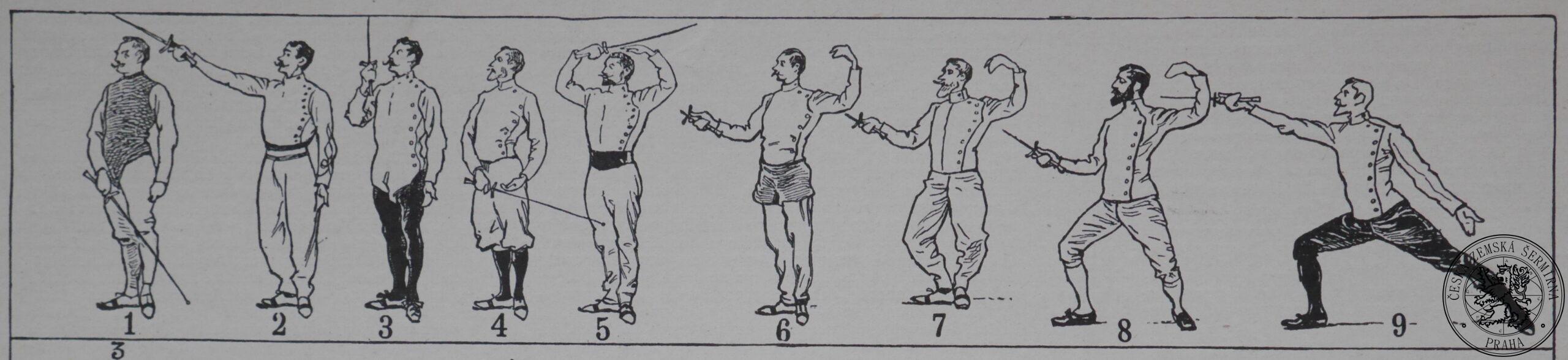


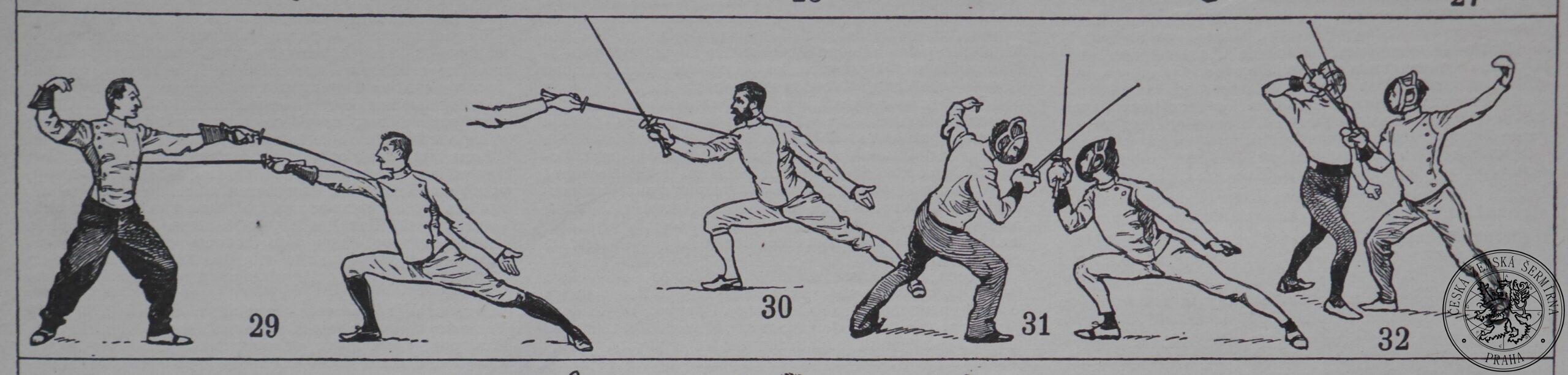
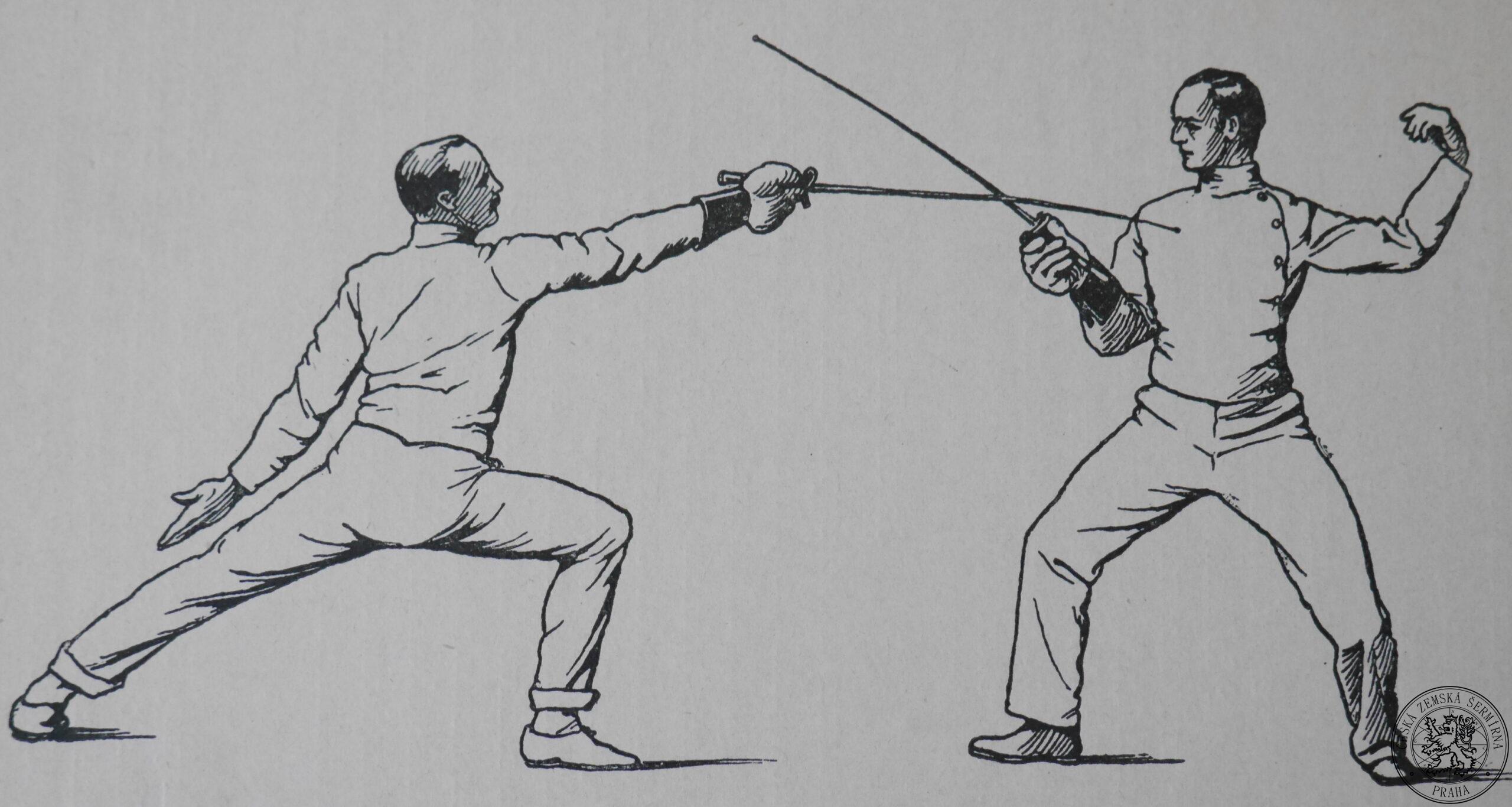
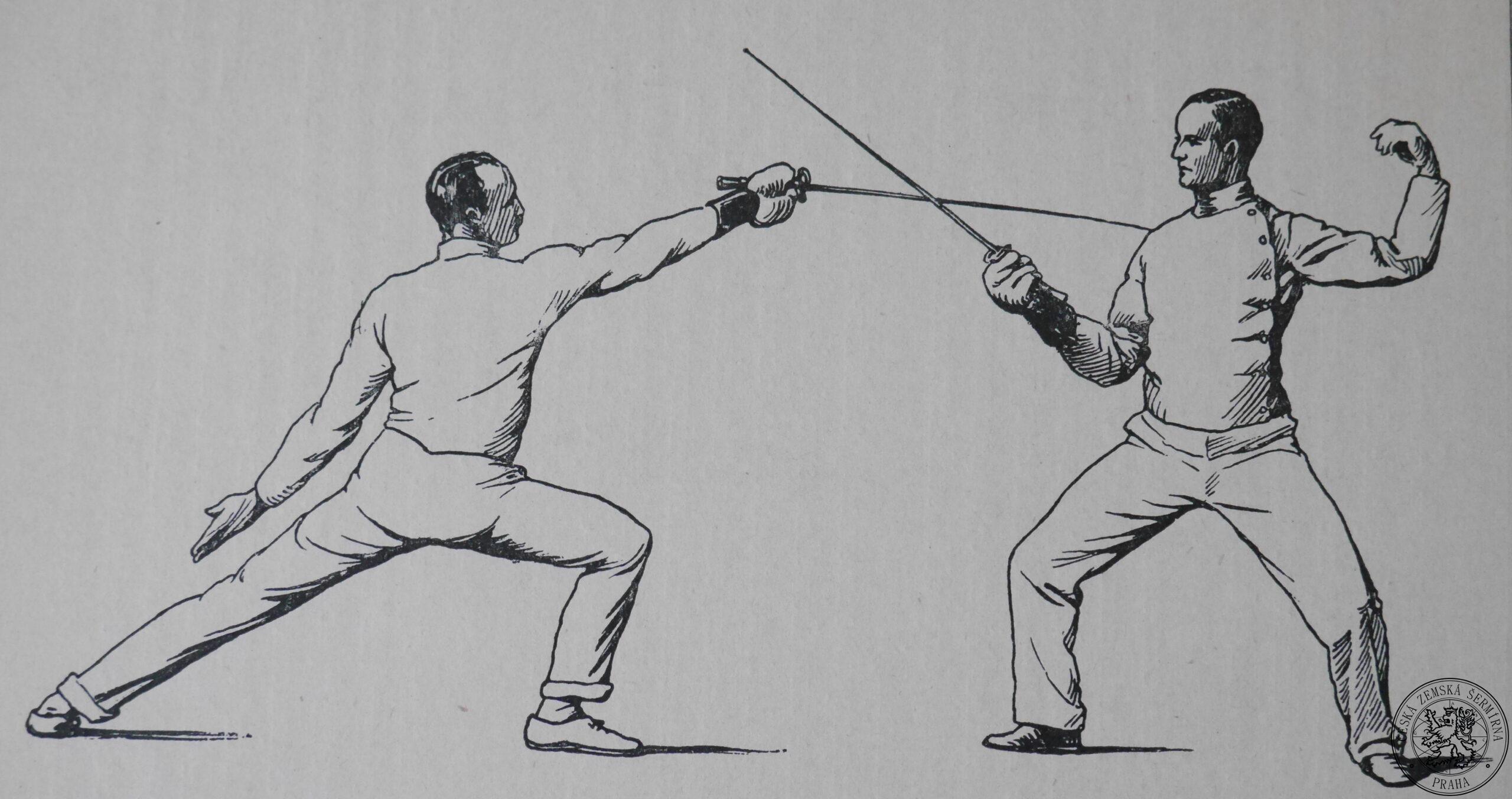


Methodology: maître d’armes Leonid Křížek, prévôt d’armes Michael Kňažko
Instructors: maître d’armes Leonid Křížek, maître d’armes Michal Kostka, prévôt d’armes Michael Kňažko
Methodological manuals:
Dr. Miroslav Tyrš: Základové tělocviku, Šermování bodmo, Praha, 1873
Ministére de la Guerre: Manuel D´Escrime, Paris, 1877
Giuseppe Radaelli: La Scherma di Punta, Milano, 1885
Camille Prevost: Théorie Pratique de l´Escrime, Paris, 1886
Louis Rondel: Foil and Sabre, A Grammar of Fencing, Boston, 1892
H. A. Colmore Dunn: Fencing, London, 1899
Robert Tvarůžek: Šerm končířem, Brno, 1926, 1933
Dr. Jan Černohorský: Šerm fleuretem a kordem, Praha, 1947
Leonid Křížek: Historie evropských duelů a šermu III – Od duelového ke sportovnímu kolbišti, Praha, 2015
Čestmír Čivrný: Šerm fleretem, Praha, 2018
Target area: the torso only, thrust only